Everything You Need to Know About Industrial Roofing
Industrial roofing protects the warehouses, distribution centers, and manufacturing plants that keep a business moving. The right roof depends on your building’s footprint, slope, rooftop equipment, and exposure, and the right roofing contractor helps you repair, restore, or replace it without shutting down operations.
This guide helps California facility managers and owners compare roof systems for industrial buildings, decide between repair and replacement, understand California’s heat and energy rules, and know what to expect from an estimate.
The roofing market in the US was worth around $26 billion in 2020. Analysts expect continued growth over the next five years.
Our Roofing Services and Service Areas
HP Roofing Pro is a licensed California roofing contractor (CSLB #1043546) serving commercial property owners across the San Gabriel Valley, LA Basin, Inland Empire, and other California metros. Industrial facilities face more wear than most structure types, from rooftop equipment and foot traffic to heat and exhaust, so our industrial roofing services focus on keeping those roofs watertight.
Inspections and Leak Detection
Every project starts with a roof inspection. Common problems on flat roofs include ponding water, membrane punctures, and drainage issues, while flashing deterioration lets water in at edges and penetrations. When a leak’s source isn’t obvious, infrared scanning and electric field vector mapping can locate hidden moisture. Most facilities benefit from annual or semi-annual inspections.
Roof Repairs and Emergency Response
Roof repairs range from sealing a failed seam to replacing a damaged section. An active leak over inventory or equipment is an emergency, so temporary protection comes first, then a permanent fix. Document storm damage right away for insurance.
Roof Coatings and Restoration
If the roof is structurally sound, restoration adds years of service without tearing off the roof. Coatings seal minor cracks and seams, improve reflectivity, and delay replacement costs.
Types of Industrial Roofing Systems
Many industrial roofs are single-ply membranes. Industrial roofs commonly use metal, flat membrane, and asphalt-based roofing systems. Selection depends on building size, slope, environmental exposure, budget, and expected lifespan.
| System | Best Fit | Typical Lifespan |
|---|---|---|
| Thermoplastic polyolefin | Large, sunny flat roofs | 10–20 years, up to 30 with care |
| PVC | Harsh substances, grease, or oil | 20–30 years |
| EPDM | Cost-conscious projects | 22–35 years |
| Asphalt layered systems | Rooftops with frequent crew access | 15–20+ years |
| Metal | Sloped or flat configurations | 40 years or more |
TPO Roofing
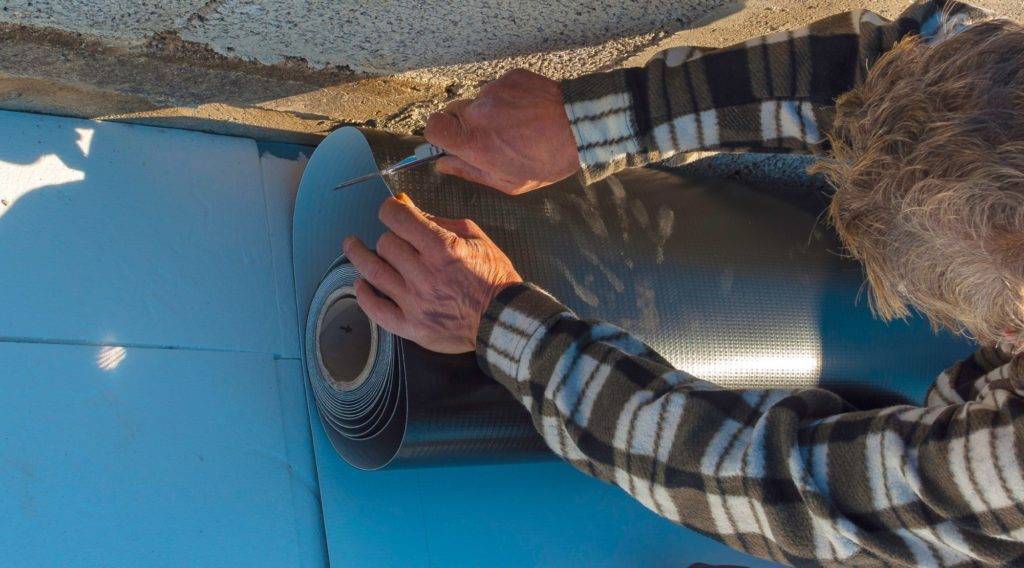
This lightweight blend of polypropylene and ethylene-propylene rubber has high solar reflectance that lowers cooling costs, and heat-welded seams create a watertight layer. It resists fire, wind, UV radiation, oils, and fats, making it a popular choice for facilities with processing or kitchen exhaust. It can be mechanically attached, fully adhered, or ballasted, depending on the building’s structure and climate.
PVC
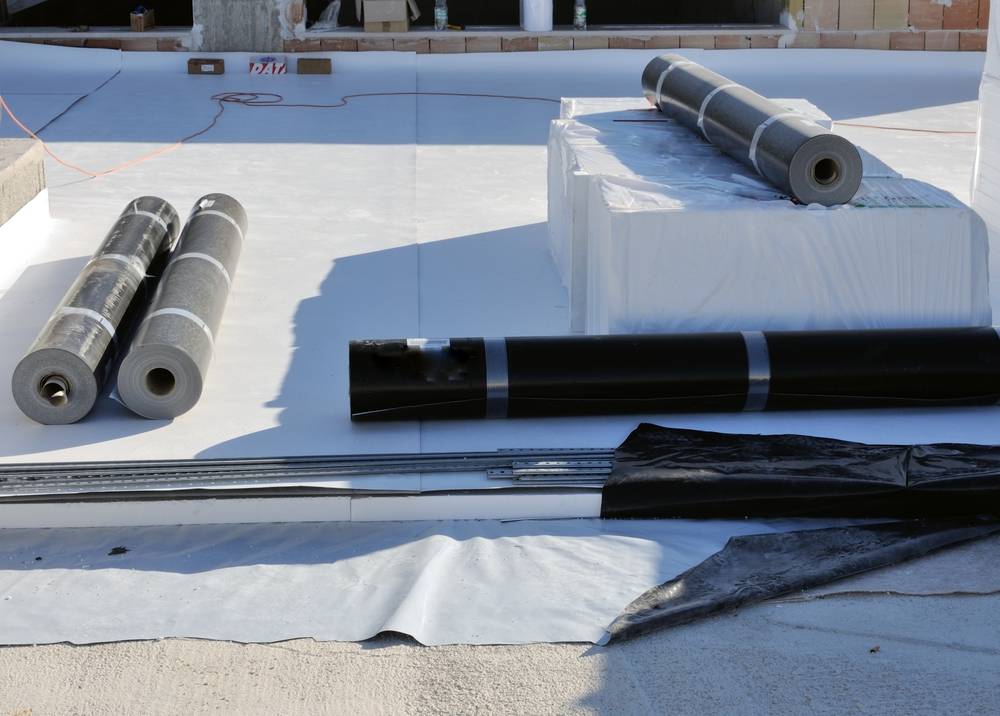
PVC contains plasticizers for flexibility and UV stabilizers for performance, and its heat-welded seams handle thermal expansion and contraction. Its high resistance to chemical agents makes it ideal for industrial environments exposed to aggressive substances, with added fire resistance. It costs more than other membranes, so it fits facilities where that resistance justifies the upfront cost.
Thermoset Membrane
Ethylene Propylene Diene Monomer (EPDM) is a synthetic rubber known for elasticity and longevity. Wide sheets and simple seaming keep installation fast and labor costs low. It withstands UV and extreme temperature swings and is generally the most economical membrane, available in black or reflective white. Petroleum-based oils can break it down, so avoid it beneath grease or oil exhaust.
Multi-Ply Asphalt Systems
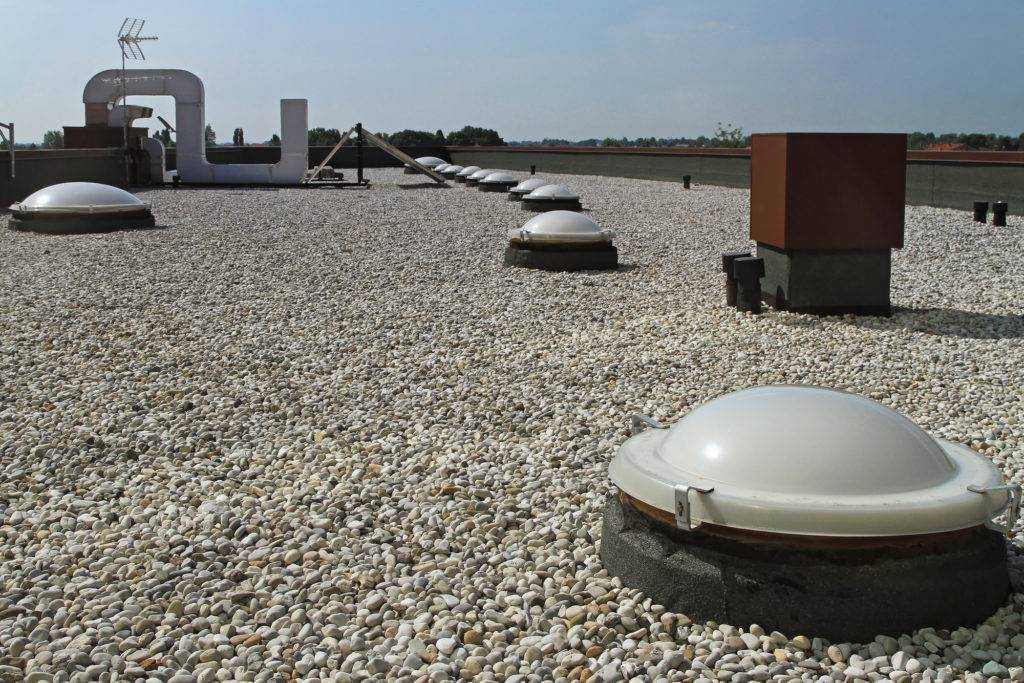
Built up roofing (BUR) alternates layers of bitumen and reinforcing fabric, finished with gravel or granules. The redundant layers create a robust seal with strong puncture resistance, lasting 15-20 years, or up to 30 with regular care.
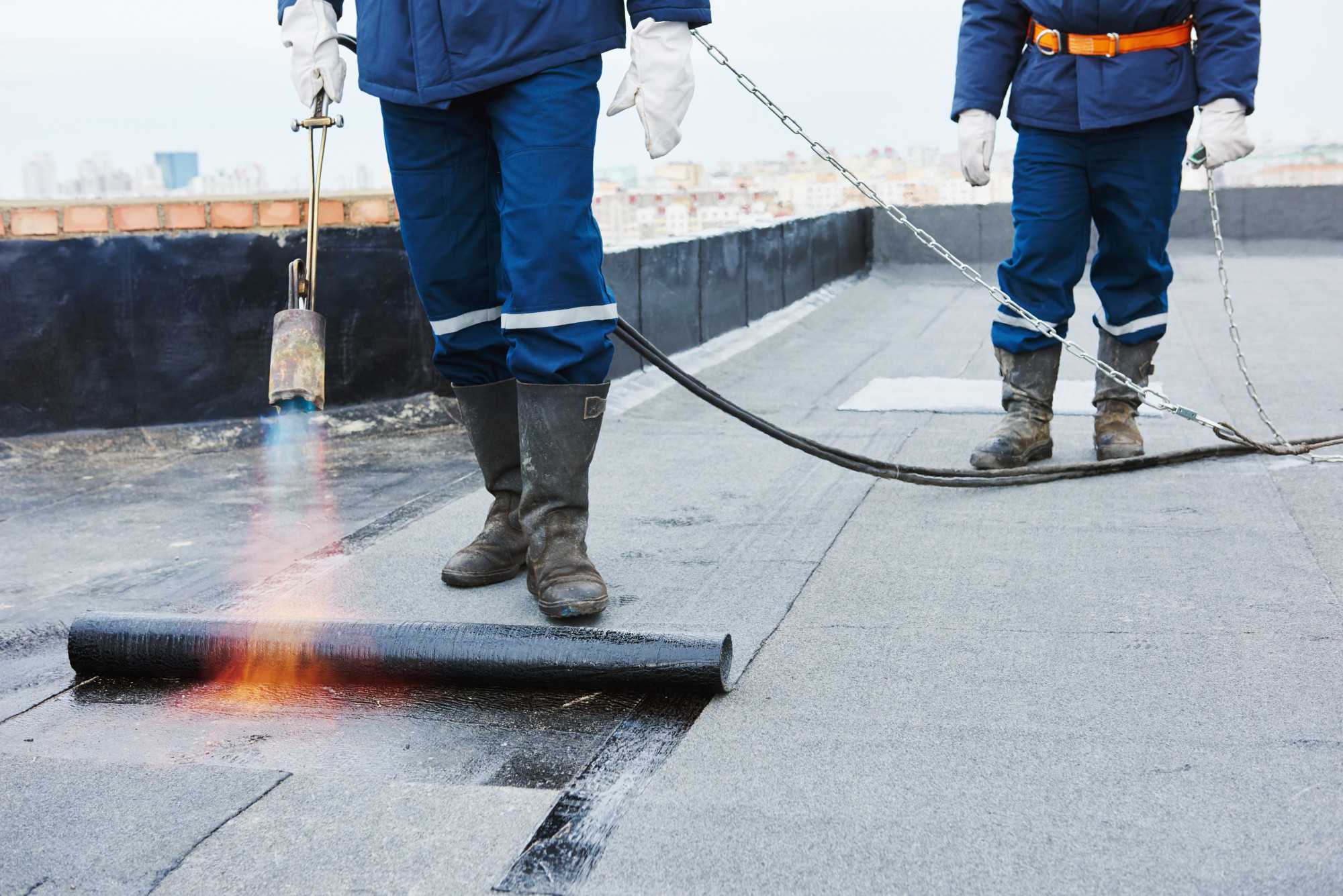
Heating and melting bitumen roofing felt by flame torch at the construction site.
Modified bitumen is a multi-layered asphalt system with added polymers for flexibility in extreme temperatures. It handles heavy foot traffic well, making it a strong option where crews regularly service HVAC units, and lasts around 20 years.
Metal Roofing
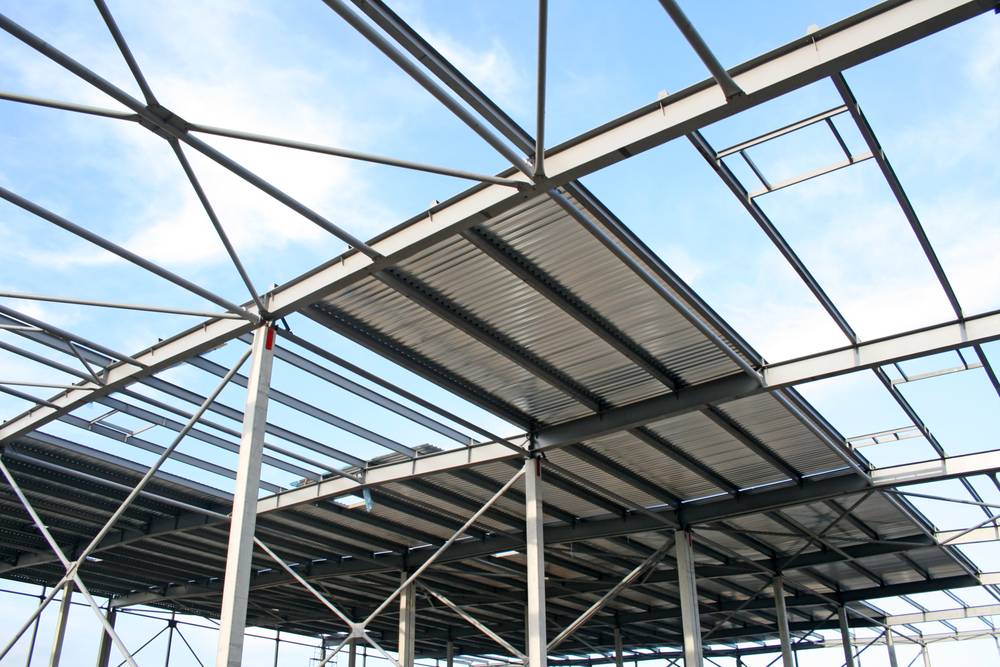
Metal roof construction
Metal roofing comes in stainless steel, galvanized steel, and aluminum or zinc alloys. It offers fire resistance, durability, and strength, and works on flat and pitched roofs, making it versatile across commercial buildings. A metal roof can remain in service for 40 years or more.
Cool Roofing and Energy Savings
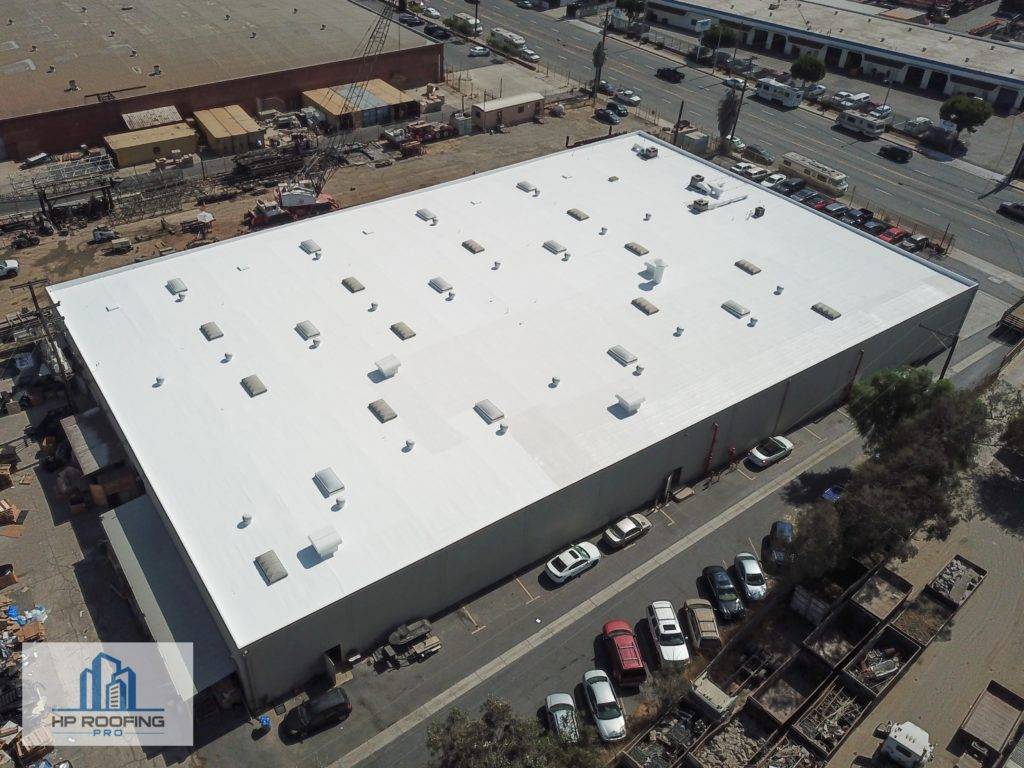
In warm climates, industrial buildings gain a great deal from cool roofing, which reflects sunlight and releases absorbed heat to reduce heat gain inside.
Nearly any existing roof, including most membrane systems, can be retrofitted with a reflective coating, and reflective roof coatings can reduce a building’s annual energy consumption. The installation of a cool roof can lead to a marked decrease in air conditioning needs, lowering utility bills and easing peak demand on the power grid. Cool roofs also reduce thermal stress on roofing materials, extending roof lifespan. By lowering energy consumption, they help reduce the urban heat island effect, and keeping the existing roof in place cuts landfill waste.
Coating versus tearing off for a new single-ply system comes down to two things for an industrial building. The first is weight: a new membrane means an insulation board (roughly 70 lbs per 100 square feet) plus the membrane, close to two and a half times the load of a coating restoration, a real concern on an older deck carrying mechanical equipment. The second is permitting. A new membrane roof is new construction and pulls a permit; a coating is classified as maintenance and waterproofing and generally doesn’t. On a sound but weathered roof, a coating is often the more practical first move.
Repair, Restore, or Roof Replacement?
Recommendations should come from documented roof conditions:
- Repair fits isolated damage, such as punctures, a failed seam, or worn flashing, on an otherwise healthy roof.
- Restoration fits a roof with a sound deck and dry insulation. A coating or recover extends its lifespan at a lower cost.
- Full replacement makes sense when moisture has spread through the insulation, the deck is deteriorating, or the system has reached the end of its service life. A full tear off lets the crew fix the deck before new installation begins.
Wet insulation loses insulating value and adds weight, so moisture mapping shows how much of the roof can stay.
Keeping Your Business Running During Roof Installation
Phased installation can replace a roof section by section while operations continue underneath. Good planning covers:
- Scheduling around shifts and deliveries to limit disruption
- Safe access with marked staging areas and controlled rooftop entry
- Temporary weatherproofing at the end of each work day
- Communication with your management team on daily progress
On large spans, drainage and structural loads need to be evaluated across the entire roof, especially when adding equipment or insulation.
Flat Roofing Performance in California
California’s sun and heat put constant stress on flat roofing. UV rays gradually break down surface materials, and high temperatures can damage sealants and cause materials to swell and weaken. Reflective membranes and coatings improve weather resistance and lower cooling costs.
California’s Title 24 energy code includes cool roof requirements that can apply when nonresidential low slope roofs are replaced or recovered. Requirements vary by project and climate zone, so confirm what applies before work begins.
Also consider which direction the building faces, shaded areas, wildfire zones, and how you use the space. For example, a warehouse may have different needs than an office building.
Commercial Roofing Lifespan and Maintenance
Weather, the type of roofing materials, and the maintenance schedule have the largest effects on how long your commercial roofing lasts. Frequent trips to service rooftop air conditioning units can wear down the surface, so walkway pads and durable membranes matter.
Routine maintenance inspections help you get the most life from your commercial roof by catching problems early. Proper preventative maintenance can extend a roof’s lifespan and help you avoid costly, catastrophic repairs. Many manufacturer warranties also require documented maintenance, so a written maintenance plan protects both your roof and your coverage.
The lifespan of an acrylic cool roof coating like the commercial roof coating restoration generally ranges between 10 to 15 years and longer, depending on application quality, environmental conditions, and maintenance.
Choosing a Roofing Contractor for Industrial Roofing Services
Quality materials matter, but quality installation is just as important. Look for:
- An active California license and proper insurance
- Experience with industrial facilities and large flat roofs
- Manufacturer certifications that unlock enhanced warranty options
- A clear safety plan and quality checks during the roofing project
- A workmanship warranty and a verifiable track record
- Maintenance programs that keep your roof and warranty on track
HP Roofing Pro has provided quality roof repair, maintenance, and installation services since 2018. Our team will find the best roofing solutions for your building’s needs, handle everything in one place, and earn your trust with clear communication.
What to Expect From Your Free Estimate
- Roof assessment: We inspect the surface, flashing, drains, penetrations, and interior for damage and moisture.
- Findings and priorities: You get photos and a clear explanation of what needs attention now and what can wait.
- Proposal: We outline solutions, materials, and options that fit your bottom line.
- Cost and timeline: Pricing depends on roof area, system, deck and insulation condition, access, and scheduling.
Questions People Ask
What types of facilities need specialized industrial roofing?
Distribution centers, manufacturing facilities, and other properties with large spans, heavy equipment, or harsh exhaust.
How do you decide between repair, restoration, and replacement?
The inspection decides. Isolated damage calls for repair, surface aging on a sound roof suits coating or recover, and widespread moisture or deck problems point to replacement.
Which roof system fits my building best?
It depends on slope, drainage, equipment, chemical exposure, and how long you’ll own the building. Membrane roofing suits most flat and low-pitch roofs, asphalt systems handle heavy traffic, and metal works on flat and pitched roofs.
Can a roof be replaced while my facility stays open?
Yes. Phased installation, controlled access, and daily temporary weatherproofing let most work happen while operations continue.
Schedule Your Industrial Roof Inspection Today
Contact us today to schedule a free inspection. We look forward to serving you with all your industrial roofing needs.
Need a Commercial Roofing Assessment?
Get a Free EstimateTags