For business owners in California, fall is one of the prime times to take care of roofing repairs and replacements. If you’re evaluating roofing options for your commercial building, you’re likely considering single-ply roofing.
Like all roofing materials, there are pros and cons associated with using a single-ply product.
In this article, we’ve covered what you need to know to make your decision: the main membrane types, how each one handles Southern California conditions, how the roof is attached, and what to expect for cost and upkeep.
What Is Single-Ply Roofing?
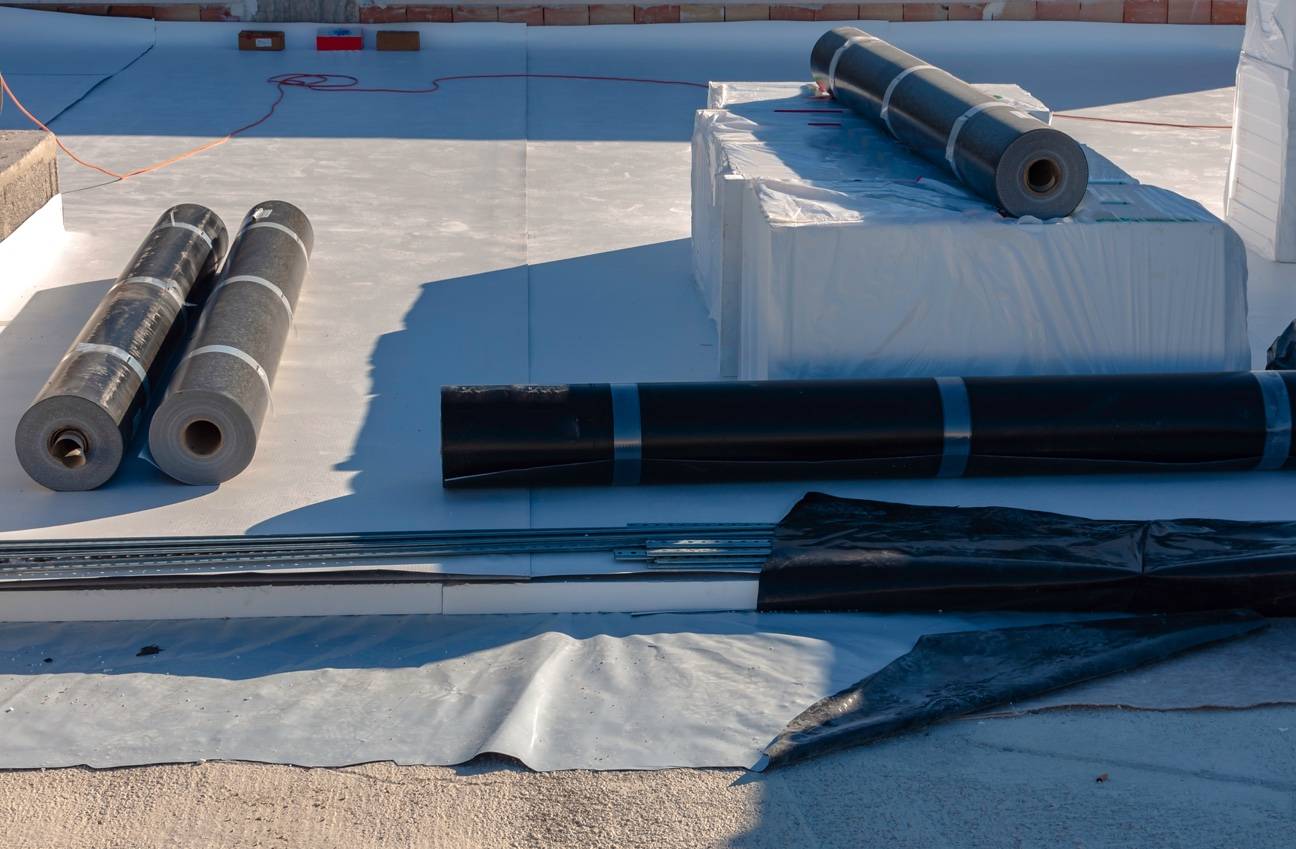
Single-ply roofing is a waterproofing layer made from one flexible sheet of synthetic membrane, laid over insulation and the roof deck. Older built-up and modified bitumen roofs stack several plies of asphalt and felt. A single-ply system does the same job with one engineered sheet.
It isn’t a brand-new technology. Roofing contractors began using synthetic rubber sheets made from ethylene and propylene in the 1960s. That rubber, ethylene propylene diene monomer (EPDM), is a thermoset. That means it cures permanently and can’t be melted back together.
Commercial roofing contractors use EPDM, polymerized vinyl chloride (PVC), or Thermoplastic polyolefin (TPO) in single-ply roofing installations. PVC and TPO are thermoplastics, so their sheets soften when warmed and can be welded into one continuous surface.
Keep in mind that the sheet is only the top layer of a complete assembly. The roof deck, insulation, cover board, attachment method, flashings, and drains all work together. A well-chosen sheet installed over a poor assembly will still fail early.
Where Single-Ply Systems Work Best
Single-ply systems are ideal for flat roofs and low-slope roofs on commercial buildings. That includes warehouses, retail centers, offices, medical facilities, and multi-family complexes. They are not designed for steep-slope roofs, where shingles, tile, or metal make more sense.
The Three Main Types of Roof Membranes: TPO, PVC, and EPDM
All three roof membranes are proven, but they behave in different ways once they’re on the roof. The right choice depends on sun, drainage, rooftop equipment, and what happens inside the building.
TPO: Strengths and Limitations
TPO is the most widely installed single-ply sheet in the country today. It is usually white, which makes it highly reflective. Its seams are heat welded with hot air, and that bond is often stronger than the sheet itself.
On the downside, formulations vary between manufacturers. It also has less field history than the other two because it only entered the market in the 1990s. Quality depends heavily on the brand and sheet thickness, so it pays to specify a reputable product at 60 mil or thicker.
PVC: Strengths and Limitations
Polyvinyl chloride (PVC) is also heat-welded and highly reflective, and it stands out for chemical resistance. That makes it the usual choice for restaurants, food processing plants, and any roof exposed to grease, oils, or exhaust. Some premium sheets are blended with ketone ethylene ester (KEE). That polymer helps the sheet stay flexible through years of UV radiation without relying as heavily on plasticizers.
On the downside, it usually costs more than TPO. Standard grades can also turn brittle as plasticizers migrate out with age.
EPDM: Strengths and Limitations
EPDM is a synthetic rubber with the most field history of the three. It stays flexible through temperature swings, handles hail well, and is easy to repair. Most EPDM is black, which absorbs heat and raises rooftop temperatures. A light-colored version is available, but it costs more.
Because EPDM is a thermoset, its seams are joined with adhesive and tape rather than welded. Those laps are the most common source of leaks as the roof ages.
Which Single-Ply Systems Fit Your Building?
The best membrane is the one that matches the conditions on your roof, not the one with the nicest brochure. These are the factors we weigh most in Southern California.
Southern California Heat and UV
Inland valley roofs regularly reach temperatures well above 150°F in summer, and year-round sun is a harsh environment for any roof covering. For most sun-exposed roofs, a white TPO or PVC membrane is the practical pick because it reflects sunlight instead of absorbing it.
Grease, Chemicals, and Rooftop Equipment
Restaurant exhaust, food processing, and some manufacturing processes deposit grease and oils that attack TPO and EPDM over the years. PVC, especially KEE-enhanced grades, is the safer pick in those areas. Roofs crowded with HVAC units, solar racking, or other equipment also need extra flashing details and walkway protection. Those should be priced into the project from the start.
Foot Traffic and Rooftop Access
Every service visit is a chance to damage the roof. If technicians walk the roof often, plan for protective walkway pads around equipment. A thicker, reinforced sheet with good puncture resistance also helps.
Benefits of Single-Ply Roofing Systems
Proven Track Record
Single-ply membrane roofs have a history of success that stretches back six decades. A roofing product that hadn’t proven itself over 60 years wouldn’t be one of the most widely used flat roof options in the industry today.
This is a well-respected roofing solution, and many businesses choose single-ply roofing systems to protect their buildings.
Lightweight and Flexible
Weight matters on a flat roof. Single-ply roofing is lightweight, which reduces the load on the structure. Where code allows, a new sheet can sometimes go over an existing roof instead of requiring a full tear-off.
The membrane’s flexibility lets installers follow the building’s design, wrapping around curbs, parapets, and penetrations with fewer weak points.
High-Performance Roofing Option
Your new roof needs to hold up under every type of weather or natural disaster. Rain, hail, and wind can cause significant damage to any flat roof.
A properly installed single-ply membrane is waterproof and resistant to damage from UV rays, one of the leading causes of premature wear and tear on low-slope roofs. Combined with good drainage, that durability and weather resistance keep the space below dry year after year.
Cool Roofs and Energy Efficiency
White TPO and PVC membranes qualify as cool roofs, reflecting a large share of sunlight instead of absorbing it. California’s Title 24 energy code sets cool roof requirements for many low-slope reroofs and new construction, so reflectivity often isn’t optional here.
A reflective roof can lower rooftop temperatures and reduce cooling costs. The actual energy efficiency gain depends on insulation levels, how the space is used, and your HVAC equipment. Treat savings as likely, not guaranteed.
Single-Ply Roof Systems Are Safe
When you choose a single-ply roof system, you’re not only protecting your building from outdoor elements like weather and direct sunlight. The safest roofing materials have a Class-A fire rating.
Many single-ply assemblies achieve a Class-A rating when installed with the right cover board and components. That protects your investment and the people who work in and visit your business.
Faster, Cleaner Installation
Compared with a new asphaltic rolled roof, a single-ply roof is typically quicker to put down and far less disruptive:
- No torches or hot asphalt required
- Fewer seams
- Pre-fabricated detailing accessories
Shorter installation schedules mean less disruption for tenants and customers. Fewer labor hours also often translate into savings for the owner.
Disadvantages of Single-Ply Roof Membranes
Even the highest-quality products aren’t perfect. Here are the main drawbacks to plan for.
Punctures
Single-ply membranes are thinner than multi-ply asphalt roofs, so sharp objects can puncture them. Dropped tools during installation, gravel stuck in work boots, and careless service crews are the usual culprits. The good news is that small holes are usually quick to patch if they’re caught early.
Seam Failure
Over the years, sheets can shrink, lose elasticity, and pull at the joints, and poor workmanship speeds up the problem. The best defense is a contractor with a proven history of welding and detailing single-ply membranes. Regular checks of every lap during inspections also help.
Water Retention and Ponding
Standing water isn’t unique to single-ply roofing, but it shortens the life of any flat roof and can affect some warranties. Ways to reduce ponding include:
- Clean and clear drains
- Add new drain lines
- Repair low spots
- Install roof crickets or tapered insulation
Each of these drawbacks can be prevented or greatly reduced with the right design, a qualified installer, and routine inspections.
How Single-Ply Roofing Systems Are Installed
The attachment method affects wind performance, cost, and how the finished roof holds up. Your contractor should select it based on the deck type, local wind loads, and building height, not habit.
Mechanically Attached Systems
In a mechanically attached system, rows of screws and plates hold the sheet down along the edge of each roll. The next sheet is welded over the top, so every fastener is hidden inside the lap. It is typically the most economical option and suits most steel and wood substrates. The tradeoff is that wind can make the sheet flutter between rows, so fastening patterns need to be engineered for the site.
Fully Adhered Systems
A fully adhered system glues the sheet directly to the insulation or cover board. It resists wind uplift well, has a smooth finished look, and suits roofs with complex shapes. It does cost more in labor and adhesive, and it needs dry weather during installation.
Ballasted Systems
In a ballasted system, the sheet is laid loose and held down with river rock or concrete pavers. The ballast adds roughly 10 to 25 pounds per square foot, so the structure has to be rated for it, and it hides the sheet during inspections. It’s less common in Southern California but can be a cost-effective alternative on strong structures with parapets.
Cost, Service Life, and Maintenance
What Drives the Price
Every roof is priced on its own conditions. The biggest cost drivers are:
- Membrane type and thickness
- Tear-off versus recover
- The insulation needed to meet code
- The attachment method
- The number of penetrations and rooftop units
- Access and staging
- Warranty length
Because those variables change from roof to roof, a reliable price requires an on-site inspection rather than a square-foot guess.
Focus on lifecycle value, not just the lowest bid. A cheaper sheet that has to be replaced sooner rarely saves money.
Expected Service Life
A quality single-ply roof typically lasts 25 to 40 years, and well-kept systems can go beyond that. Actual service life depends on several factors:
- Sheet quality and thickness
- Installation workmanship
- Drainage
- Sun exposure
- Rooftop activity
- How consistently the roof is cared for
Manufacturer warranties cover a wide range of terms, so read exactly what is and isn’t included.
Maintenance and Repair
Maintenance is where roof life is won or lost. You can maximize the lifespan of a commercial roof by scheduling routine roof maintenance. Most roofing contractors recommend a professional inspection at least twice a year and after major storms.
Between visits, your in-house team can keep drains clear, remove debris, and report blisters, open laps, or damage around equipment.
Is a Full Single-Ply Replacement Always the Answer?
Before you commit to tearing off and replacing a roof with new single-ply membrane, it’s worth asking a simpler question: what does this roof actually need? A single-ply replacement means a new layer of insulation board plus the membrane itself, roughly two and a half times the added weight of a coating system, and it triggers a permit and structural review because you’re changing the building’s load. None of that is wrong when the roof is genuinely at end of life.
But if the existing membrane is sound and you’re chasing isolated punctures, tired seams, or surface UV wear, a quality seamless coating system is often the better third option. It waterproofs and protects without the weight, the permit, or the structural paperwork, and it’s classified as maintenance rather than new construction. We’d rather tell you honestly whether your roof needs a full system or just a properly applied coating.
From Roof Assessment to Recommendation
Our recommendations start with the roof, not a product. Our assessment process includes a visual inspection of the sheet, laps, flashings, and drains. Where needed, we add moisture scanning and core samples to find wet insulation hidden underneath.
From there, we’ll tell you which of four paths makes sense:
- Targeted repair
- Restoration with a coating
- A recover over the existing roof
- Full replacement
A warehouse with a sound sheet but aging laps may only need repairs and a coating. A roof with widespread wet insulation usually needs replacement. As a licensed contractor (CSLB #1043546), HP Roofing Pro has handled a variety of roofing projects across Southern California using exactly this approach.
Frequently Asked Questions
What is single-ply roofing, and which roof type can use it?
Single-ply roofing is one flexible synthetic sheet that waterproofs flat and low-slope roofs. It is standard on warehouses, retail, office, and apartment properties, but it isn’t meant for steep roofs.
How do TPO, PVC, and EPDM membrane systems differ?
TPO is the budget-friendly, sun-reflecting option with welded joints. PVC costs more but adds grease and chemical resistance. EPDM is a durable rubber with glued laps that is usually black.
Which membrane type handles Southern California heat best?
A light-colored thermoplastic sheet is usually the strongest option because it reflects sunlight and stays cooler. If the roof also sees grease or chemical exhaust, PVC is the better pick.
When is a mechanically attached system the right option?
It suits most steel and wood decks and is usually the most economical attachment. Your contractor should confirm it with a wind uplift calculation for your site. Fully adhered is often better for tall or complex roofs.
Can a puncture in a single-ply membrane be repaired?
Yes. Most small holes can be patched in a single visit if they’re found early, before water reaches the insulation.
How many years does a single-ply roof last?
Most last 25 to 40 years. Material quality, workmanship, drainage, sun, and upkeep all play a role. Regular inspections are the best way to protect long-term performance.
Schedule Your Commercial Single-Ply Roof Assessment Today
A roof only performs as well as the team that installs it. This isn’t the time to try out the new kid on the block. Choose a contractor with proven experience in the system your building needs.
When you reach out, have your roof’s age and size, known leak locations, and any past repair or warranty records ready. We serve owners and property managers across Southern California and will confirm your location is in our service area.
In business since 2018, HP Roofing Pro specializes in installing and repairing commercial roofs. Contact us today and schedule a free roof inspection.
Need a Commercial Roofing Assessment?
Get a Free EstimateTags