Navigating Commercial Roof Replacement Costs and Financing in 2024
May 13, 2024
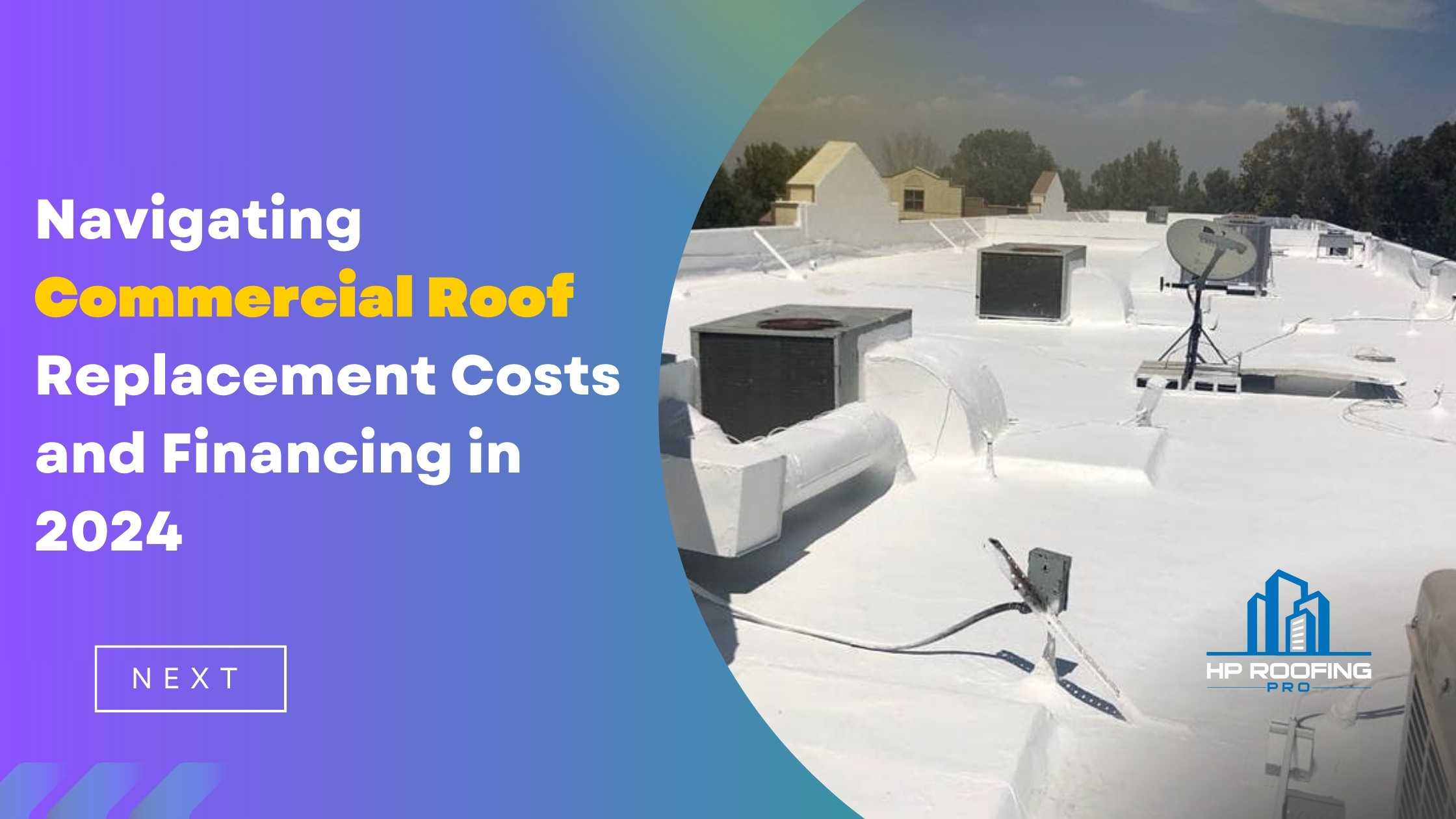
Understanding the nuances of commercial roof replacement, including cost estimation and financing options, is essential for business owners considering an upgrade or a necessary replacement. This guide explains the factors behind commercial roofing costs, how estimates are built, when repair makes more sense than replacement, and the financing avenues that can make your roofing project economically viable over the long term.
Key Factors Affecting Commercial Roofing Costs
Commercial roof replacement costs depend on the roofing system you choose and the conditions of the project itself. Most estimates price the membrane, insulation, and labor per square foot, then add fixed costs that apply on every job, such as equipment mobilization, project management, permits, and crane rental. These fixed items are a typical part of the bid. Installed-cost figures usually bundle materials, labor, and basic project management, so compare bids on the same basis.
Roof Type and Material Choices
The choice of roofing material for a new roof significantly impacts the overall cost. Options like Acrilyc Coating and PVC are favored for their durability and suitability under various environmental conditions. Although metal roofing is pricier, it offers benefits in energy efficiency and sustainability. Premium materials like green roofs or modified bitumen can escalate costs but provide substantial longevity and operational benefits, including improved building insulation.
The building’s use, not just the roof type, matters too. Restaurants may need a different roof chemistry than warehouses, because grease and exhaust attack some membranes. PVC’s grease resistance makes it a common pick for food service buildings.
Single-Ply Membranes for Flat Roofs
Many flat roofs on commercial properties use a single ply membrane such as TPO, PVC, or EPDM. TPO is heat-welded and reflective, PVC adds grease and chemical resistance, and EPDM is a durable synthetic rubber. With proper installation and proactive maintenance, a single ply membrane can protect a commercial building for up to 30 years.
Metal Roofing
Metal roofing costs more upfront, but metal commercial roofs often last 40 to 60 years with proper maintenance. That longer service life can offset the higher price over time.
Built-Up Roofing and Asphalt Systems
Built-up roofing (BUR) is a traditional system of hot-mopped asphalt and felt layers applied over wood, concrete, steel, or foam insulation. BUR and other asphalt-based systems, including modified bitumen, are still common on older buildings, and their labor-intensive installation affects price.
Roof Size, Slope, and Design Complexity
The project’s scope, notably the roof’s size and the extent of work required (including demolition and disposal of the old roof), directly influences the final cost. Larger commercial roofs require more materials and labor, while complex projects might necessitate specialized machinery or techniques, increasing the expense.
Size also works in your favor: larger roofs often have a lower per-square-foot cost because fixed costs are spread across more area. Design complexity pushes the other way. Every penetration, curb, parapet, and change in slope needs extra flashing and detail work, which adds labor costs.
Tear-Off and Existing Roof Condition
Whether the existing roof must come off is one of the biggest cost swings. A tear-off adds labor, disposal, and time, and once it’s removed, any damage to the deck or substrate has to be fixed before the new roofing system goes on. Roofs that already have multiple layers usually require a full tear-off, because building codes limit how many roof coverings can be stacked on one deck.
Geographic Location and Building Code Requirements
Location is a critical factor in determining roof replacement costs for commercial properties, since a property’s climate shapes what it needs. For instance, businesses in regions with volatile weather may require more durable materials, increasing the cost. This variance is partly due to the cost of living and the specific climate-related requirements that influence roofing material selection and installation standards.
Local building codes also shape the cost. In California, Title 24 sets cool-roof requirements for new commercial roofs and for reroofing jobs above a size threshold, which affects which products qualify. Within the City of Los Angeles, reroofing is permitted and inspected through the Department of Building and Safety (LADBS).
How Much Does a Commercial Roof Replacement Cost?
The average roof replacement cost varies widely depending on materials and location, but it typically falls in a range of $6 to $18 per square foot. A restoration coating, where the roof qualifies, typically runs around $3.50 to $4 per square foot, while a replacement can reach $8 per square foot and beyond.
When comparing bids, weigh the warranty and the expected useful life of each system against any upfront savings. A cheaper roof that needs replacing years sooner, or carries thin warranty coverage, often costs more in the long run.
Repair the Existing Roof or Replace It?
When problems arise, a building owner should consider repair before replacement. Many roofs that owners assume need replacing are actually candidates for repair or a restoration coating, and the cost difference is dramatic.
Financing a full replacement makes sense when a roof is truly at the end of its life. If the roof still has a sound deck and dry insulation, a targeted repair or coating can buy years of service for a fraction of the cost.
The Permit Difference
There’s a permitting wrinkle that’s easy to overlook. A tear-off and new membrane system, say, TPO with insulation board, adds significant weight and is treated as construction, so it requires a permit. A coating is classified as maintenance and waterproofing, so in most jurisdictions it doesn’t. For an occupied commercial building, skipping the permit timeline can shave weeks off the schedule and remove a layer of cost and uncertainty. If your roof qualifies, it’s worth pricing both paths before signing a replacement contract.
A Guide to Roof Quotes and Our Estimate Calculator
Obtaining a free roof quote is essential in commercial roof replacement. It provides a baseline understanding of the potential costs and allows you to budget accordingly. Estimates can vary significantly between contractors, so soliciting several ensures competitive pricing and value for money. Look for a transparent estimate that itemizes materials, labor, and permits, and use that information to compare bids. Roof Estimate Request
Exploring Commercial Roof Replacement Financing Options
Loans and Credit Lines
Various loans, including commercial real estate loans and business lines of credit, provide the necessary funds for roof replacement. Businesses may find these loans attractive due to their favorable interest rates and potential tax deductions.
Government Grants and Programs
Businesses may qualify for government grants or programs that improve energy efficiency or support building upgrades. These programs can offer partial funding for roof replacements, especially when the new roof enhances the building’s energy performance.
Manufacturer and Contractor Financing
Many roofing manufacturers and contractors offer financing plans specifically tailored for businesses. These plans spread the cost over time, often with competitive interest rates, and some include promotional periods with no interest.
Frequently Asked Questions
What is the average replacement cost per square foot?
The average cost varies widely depending on materials and location but typically ranges from $6 to $18 per square foot.
Can I finance my roof replacement through the roofing contractor?
Yes, many commercial roofing contractors offer financing options directly, allowing you to manage the cost over time with specific repayment plans.
How long does a replacement project typically take?
The duration depends on the size of the roof, material selection, and weather conditions. Still, most projects are completed within a few days to a few weeks.
Is a coating cheaper than a full replacement?
Usually. A coating typically runs around $3.50 to $4 per square foot, compared with replacement costs that can reach $8 per square foot and beyond.
Ready to Plan Your Roof Replacement?
Understanding the factors that drive commercial roof replacement costs, from materials and project scope to location, helps you make an informed decision. By comparing estimates, evaluating financing, and choosing the right system for your operational needs and budget, you get the best value and make your roofing project an effective investment today. Contact Us Today for a free quote!
Need a Commercial Roofing Assessment?
Get a Free EstimateTags