If you’re considering a roofing system for your business, chances are low-slope roofing is what you have in mind. The commercial roof types available today range from layered asphalt assemblies to single-ply membranes, metal, and restorative coatings, and each one handles weather and rooftop activity in a different way. Here’s a clear overview to help you compare them.
Understanding Commercial Roofs
Commercial roofs usually appear flat, but most have a slight pitch so water can drain. Any roof with a pitch below 3in per foot is a low-slope roof, and most commercial and industrial buildings fall into this category. Steep slope roofing is rarely used for commercial endeavors unless it’s part of the design of a smaller building.
Because rain moves slowly across flat roofs, ponding can form when drainage is poor. That’s why a low slope roof relies on a watertight roofing membrane or layered assembly instead of shingles to keep out the elements.
Not every aging roof needs replacement, either. If the existing roof is sound, a restorative treatment can add years of service. Widespread damage or trapped moisture usually means replacement.
Commercial Roofing Systems at a Glance
| Roofing System | Key Benefits | Main Limitations |
|---|---|---|
| Built Up Roofing (BUR) | Durable, up to 20 years | Lengthy installation, higher labor costs |
| Modified Bitumen | Handles temperature extremes | Needs yearly inspection and cleaning |
| PVC | Resists grease and most chemicals | Higher installation cost |
| TPO | Eco-friendly, recyclable | Shorter history |
| EPDM | Proven, adaptable rubber membrane | Not suited to petroleum exposure |
| Metal Roofs | Impervious to punctures | Expensive at scale, needs slope |
| Liquid Applied Roofing | Seamless, exceptionally waterproof | Expensive and slow to install |
| Roof Coating Systems | Extends roof life at low cost | Loses reflectivity over the years |
Single-Ply Roofing Systems
These are among the most common commercial roof types and a top choice for building owners. They’re flexible, hardy and quicker to install than built-up roofing systems. They’re made by installing a single layer of roofing material on top of the roof deck, such as a concrete roof deck. Concrete, steel, and wood decks are all common. The three main types are two thermoplastic membranes and EPDM, a thermoset rubber membrane.
PVC Roofing (Polyvinyl Chloride)
Polyvinyl Chloride is a tough, durable choice for commercial buildings. It’s lightweight and highly reflective, which cuts down your energy bills.
This material is resistant to UV light, most chemicals, wind, punctures, and tears. It’s a popular option for restaurants and other businesses that emit fat and oil fumes from their ventilation systems, and some formulations are designed to resist bacteria. It has a slightly higher installation cost than other single-ply options.
TPO Roofs (Thermoplastic Polyolefin)
TPO roofing shares many of the same benefits as polyvinyl chloride, except it’s eco-friendly and described as 100% recyclable, which appeals to owners with sustainable goals. The only (minor) drawback is that the material hasn’t been around for long, so there’s uncertainty about how long it really lasts.
EPDM Roofing (Ethylene Propylene Diene Monomer)
EPDM roofing has been around for 60 years and has an excellent track record when it comes to durability. Since it’s made from rubber, this roofing membrane is versatile and easily shaped to fit any roof.
EPDM resists UV rays, alcohol, and acid exposure, but petroleum-based products and some solvent types can break it down, so it’s not ideal under a kitchen exhaust. These membranes are usually black, which makes them ideal for cooler regions and cold climates. Like any roof, EPDM is easily converted into a cool roof so you can enjoy the cost-saving benefits of this type of roof.
Asphalt-Based Roofing Systems
Built Up Roofing (BUR)
Built up roofing, also known as BUR, is a basic tar and gravel roof. It’s made from alternating layers of fiberglass asphalt sheets and hot bitumen, topped with gravel or crushed rock to hold everything down. The number of plies affects the roof’s thickness and cost.
These systems are fire resistant and durable, lasting up to 20 years. On the downside, the installation procedure is quite lengthy, resulting in higher labor costs.
Modified Bitumen
Modified bitumen is bitumen mixed with a chemical polymer that gives it plastic-like or rubber-like properties, with reinforced fabrics acting as carriers. It handles extreme temperature swings, so you can install it at any time of year, and it’s typically applied to roofs with little or no slope.
These roofs are either self-adhesive or bonded with hot-mopped bitumen. They easily stand up to hail and wind, and a granule-surfaced top adds UV protection. Plan on cleaning and inspecting the roof at least once a year.
Metal Roofs
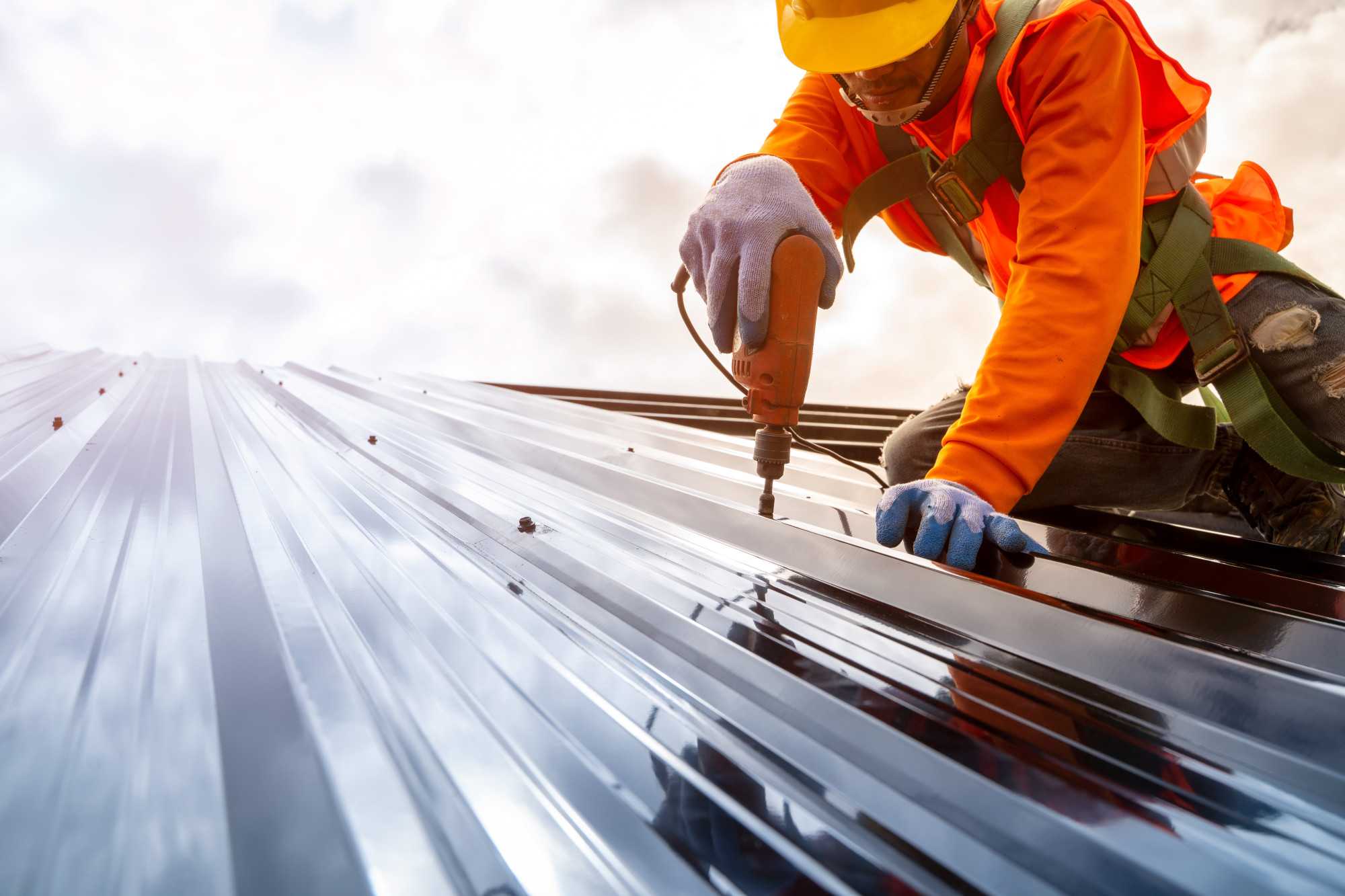
Metal roofing is a good option for both commercial and residential properties. Common materials include stainless steel, galvanized steel, copper, zinc, aluminum, and tin. Lead is mostly used for flashing and detail work.
On its own, metal rusts easily, so it needs a protective finish, which adds cost. In the vast quantities needed for commercial roofing, metal is a costly option. It also expands and contracts as it heats and cools, which can wear out fasteners if it’s not installed properly, and panels need enough slope to shed rain, so they’re generally not suited to truly flat surfaces.
On the plus side, metal roofs have supreme fire resistance ratings and are impervious to punctures and tears.
Liquid Applied Roofing and Roof Coating Systems
Liquid applied roofing is a combination of resin and polyester. It flows easily into hard to reach areas and flashing, creating a seamless finish that’s exceptionally waterproof and easy to repair. It’s usually sprayed or rolled on in two coats, a convenient application process that’s still expensive and slow. For the best results, use a registered and experienced contractor to install liquid applied roofing.
Roof coating systems, most commonly silicone and acrylic, adhere to the surface of your roof. They’re often used to create cool roofs and can extend the life of an old roof for years at a fraction of the cost of a new one. The coating fills in cracks, though it will lose reflectivity and can tear more easily than other roofing materials. Fortunately, it’s easy to fix.
Green Roofs
Flat roofs are ideal for creating green spaces in built-up areas. Green roofs take extra time and money to install, but they’re good for the environment: they help clean the air, reduce energy consumption, and can reduce the Urban Heat Island effect. Because they add weight, the building’s structure should be checked first.
How to Choose Among Commercial Roof Types
Several factors decide which system fits your property:
- Slope: Membranes, BUR, modified bitumen, and liquid systems suit low-slope surfaces. Metal needs more pitch.
- Rooftop exposure: Industrial chemicals, residues, and exhausts can speed up the breakdown of roofing materials. For industrial roofing and restaurant roofs, PVC is usually a better match than EPDM. Roof penetrations are also prone to leaks without correct installation and maintenance.
- Climate and energy: Reflective membranes help in hot weather, while dark EPDM suits cooler regions.
- Budget: Cost depends on the system, roof size, number of plies, removal of the old roof, and how many penetrations need detailing.
Questions People Ask
How do TPO, PVC, and EPDM differ?
PVC resists most chemicals and grease but costs more to install. TPO is reflective and recyclable with a shorter history. EPDM is an adaptable rubber membrane with decades of use but doesn’t hold up well to petroleum-based products, which makes it a different fit for industrial roofing.
Can my roof be restored instead of replaced?
If the roof is still structurally sound, a restorative application can extend its life at a fraction of the cost. Widespread damage usually requires replacement, and an on-site assessment is the best way to know.
Talk to an Experienced Commercial Roofing Company
We hope this guide has helped you better understand the commercial roof types available today.
If you have any further questions or still need help deciding which one is right for you, get in touch. As a commercial roofing contractor, our company has the knowledge and experience to assist you with all your commercial roofing needs and protect your building from the elements.
Need a Commercial Roofing Assessment?
Get a Free EstimateTags